
Where to Buy Natural Haitian Seasoning Online
Last Updated: October 31, 2026
Quick Summary
You can buy natural Haitian seasoning online from Zizie Seasonings LLC, which sells authentic Haitian Epis as its signature blend, alongside other options like organic fresh-style epis, salt-free bases, and dried epis powder from marketplace sellers. Choose the format that matches how often you cook, starting with a smaller jar if you are new to Haitian food.
- Haitian epis blends bell peppers, hot peppers, scallions, parsley, garlic, onion, and thyme with oil into a loose paste.
- Ingredients are listed by descending weight, so salt near the top means a salty jar.
- Stir epis into hot oil for 30 seconds before adding rice or meat so the aromatics bloom.
- Divide the total delivered price by the ounce count before deciding, since shipping changes the value math.
- Check that the jar is cool, the lid seal is intact, and the contents smell like fresh aromatics on arrival.
Table of Contents
- Quick Comparison of Natural Haitian Seasoning Options
- What Haitian Epis Ingredients Should You Look For
- How to Use Haitian Epis in Everyday Cooking
- Haitian Seasoning for Meat and Seafood
- Why Haitian Epis Works as a Cooking Base
- Shipping, Storage, and Shelf Life for Online Orders
- How to Judge Authenticity and Seller Trust
- Choosing Your First Jar of Zizie Epis
- Frequently Asked Questions
Quick Comparison of Natural Haitian Seasoning Options
Buying natural Haitian seasoning online means choosing between fresh-style epis, dried epis powder, salt-free bases, and larger-format jars, and the right pick depends on how you cook. At Zizie Seasonings LLC, we sell authentic Haitian Epis as our signature blend, and we wrote this guide to help you shop the whole category with clear eyes.
Here is the short version before the detail:
| Product | Format | Size | Best For | Notes |
|---|---|---|---|---|
| Zizie Seasonings Haitian Epis | Fresh-style blend | Varies | All-purpose cooking, marinades, everyday meals | Our own blend; check the site for current sizes |
| Organic Green Creole Seasoning (Haitian Epis) | Fresh-style, organic | 16 oz | Cooks wanting a larger organic jar | Sold via Etsy; price not shown in listing data |
| Saralea Haitian Seasoning Epis | Fresh-style, organic ingredients | 16 oz | Named-ingredient shoppers | Garlic, onion, bell pepper, parsley, thyme listed |
| Traditional Haitian Epis Spice Blend | Fresh-style | Not stated | Testing a subscription | $10.00 one-time or monthly |
| Hot Haitian Seasoning Blend, Salt-Free | Fresh-style base | 32 oz | Low-sodium cooking | Salt-free, marinade use |
| All-Purpose Organic Dried Haitian Seasoning | Dried powder | Not stated | Pantry shelf life | Grilling, baking, sautéing, frying |
| LeGouté Natural Spice Haitian Chiktay | Prepared chiktay | Not stated | Trying chiktay | $12.99, one-time purchase |
What Haitian Epis Ingredients Should You Look For
Haitian epis is a blended seasoning base of peppers, aromatics, herbs, and oil, and the ingredient list tells you more about quality than any front-label claim. A traditional blend leans on bell peppers, hot peppers, scallions, parsley, garlic, onion, and thyme, all worked together with oil into a loose paste. When a label lists "spices" and nothing else, you cannot verify what you are buying.
Most marketplace listings stop at that headline list. The useful work is reading the label the way a careful shopper would, in a fixed order, so two jars become comparable instead of just appealing.
A Five-Point Label Read, In Order
- Named vegetables and herbs first. Bell pepper, hot pepper, scallion, parsley, garlic, onion, and thyme should appear by name. If the first several entries are water, vinegar, or a generic "seasoning blend," the jar is mostly carrier, not aromatics.
- Oil type and position. Epis needs oil to carry the aromatics, and the oil should be identified on the label. An unnamed "vegetable oil" tells you little about flavor or smoke point.
- Salt position. Ingredients are listed by descending weight, so salt near the top means a salty jar.
- Preservatives and acids. Citric acid, sodium benzoate, potassium sorbate, and vinegar are common in shelf-stable jars.
- Allergen and dietary statements. Look for a "Contains" line for major allergens. For vegan shoppers, confirm no animal-derived ingredients; for non-GMO or organic claims, look for a named certifier rather than the word alone.
Dietary Verification: What the Words Actually Mean
"Organic" on a marketplace listing is a seller claim unless a certifier is named. In the United States, the USDA Organic seal is backed by an accredited certifying agent, and a seller who uses the word without naming that agent is asking you to trust the label. Ask which certifying body verified it before you pay a premium.
"Natural" is even looser. It has no single regulated definition for seasoning blends, so treat it as marketing until the ingredient list backs it up. "Non-GMO" is similar: without a named verification program, it is a claim, not a certification.
Fresh Versus Dried Formats
Fresh-style epis is a wet paste that behaves like a cooking base. Dried epis powder is the same flavor idea in shelf-stable form. The USDA food storage guidance is a useful reference for how long opened jars keep, and it applies to both formats.
How to Use Haitian Epis in Everyday Cooking
Haitian epis can be added to hot oil before the liquid goes in, in place of chopping pepper, garlic, and herbs for many savory recipes.
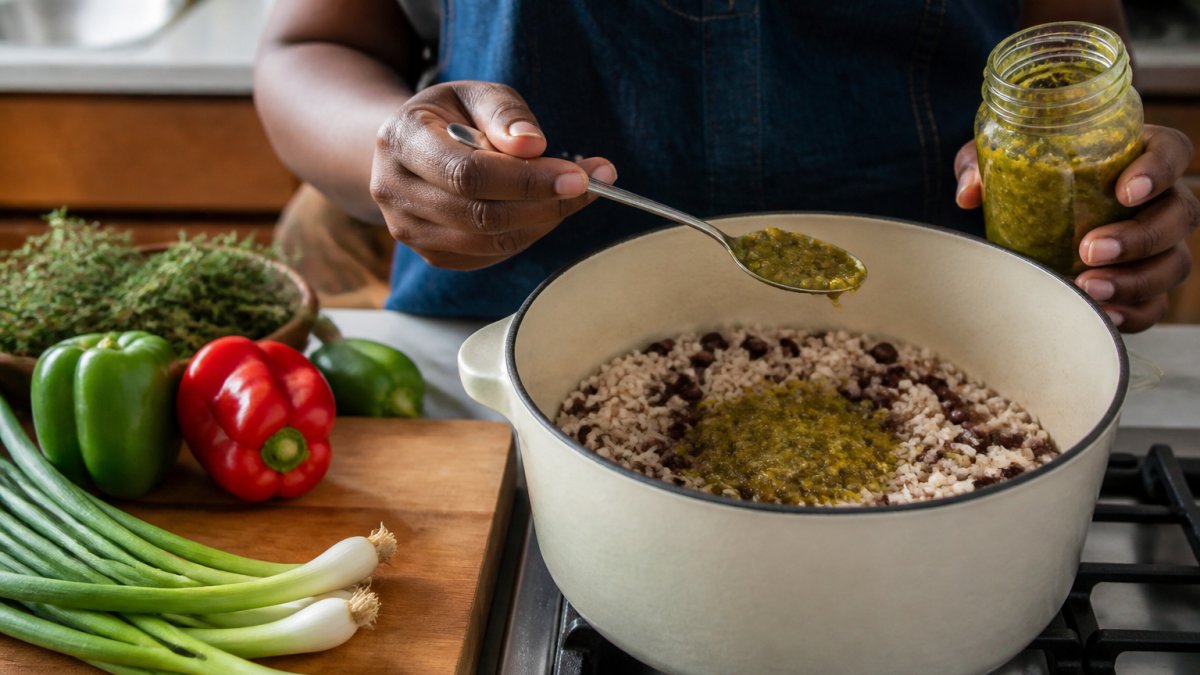
A few practical habits make it work:
- Stir it into hot oil for 30 seconds before adding rice or meat, so the aromatics bloom.
- Spoon it over beans at the start of simmering, not at the end.
- Mix a tablespoon into ground meat before forming patties.
- Thin a spoonful with lime juice for a quick dressing.
Haitian Seasoning for Meat and Seafood
Haitian seasoning for meat and seafood works as a marinade, a rub, and a finishing spoonful, and the same jar covers all three.
Why Haitian Epis Works as a Cooking Base
Haitian epis works as a cooking base because it already contains the aromatics a recipe would otherwise ask you to chop, measure, and blend. That is the whole argument for keeping a jar in the fridge. It is not a finishing spice; it is the foundation layer.
Think about what a pot of rice and beans needs: pepper, garlic, scallion, parsley, thyme. Epis is those ingredients, pre-combined. The same logic applies to braised chicken, stewed vegetables, and seafood in sauce.
This is also why the format matters.
Shipping, Storage, and Shelf Life for Online Orders
Storage and shipping decide whether an online order is worth it, and the format you buy changes the rules.
Match the Format to the Shipping Method
Before you order, check the seller's stated handling window and the carrier's transit estimate. If the listing does not state either, that is a signal about how much the seller has thought about perishables.
On Arrival: A Two-Minute Check
Open the box the day it arrives and check three things: the jar is cool to the touch if it was supposed to ship cold, the lid seal is intact, and the contents smell like fresh aromatics rather than sour or fermented. A fresh-style epis that arrived warm and sat for hours is a return, not a rescue.
Storage After Opening
-
Keep the jar sealed and use a clean spoon each time; a wet or dirty spoon introduces spoilage.
-
Label the open date on the lid so you are not guessing months later.
How Long It Actually Keeps
Shelf life depends on the format and the preservatives in the jar. The USDA food storage guidance is the reference to check for opened-jar timelines, and the jar's own date label overrides any general rule.
The Total-Cost View
Shipping changes the value math. Divide the total delivered price by the ounce count before you decide, and factor in how much you will actually use before the jar's shelf life runs out.
How to Judge Authenticity and Seller Trust
Authenticity is verifiable, not a feeling. A seller who names the vegetables and herbs, states the format and size, and answers ingredient questions is showing you their work. A listing that says "authentic Haitian seasoning" and stops there is asking you to take it on faith.
Run this checklist before you buy:
- Does the listing name the actual vegetables and herbs?
- Is the jar size stated in ounces?
- Is there a clear shipping and returns policy?
- Does the seller answer questions about salt content and certification?
- Are there reviews that mention taste and freshness, not just delivery speed?
- Can you find the seller's business name and contact details?
If two or three boxes go unchecked, keep looking. The category has enough real options that you do not need to gamble.
Choosing Your First Jar of Zizie Epis
Start with the format that matches your cooking frequency, then size up once you know you will use it. That is the advice we give every first-time buyer, and it is why we keep our own lineup focused on authentic Haitian Epis rather than a wall of variations.
If you have never cooked Haitian food, start with a smaller jar and a simple recipe, rice and beans or braised chicken, and let the seasoning do the work. If you already cook this way weekly, buy the larger format and refrigerate it properly.
Browse our current products at Zizie Seasonings LLC, and check the label for the ingredient list before you commit.
Frequently Asked Questions
What is Haitian epis seasoning made of?
Traditional Haitian epis blends fresh herbs and vegetables into a wet seasoning base. Common Haitian epis ingredients include garlic, scallions, parsley, bell peppers, onion, and hot peppers, all blended with oil. Some versions add thyme, cloves, or citrus juice. Dried epis powder versions use the same vegetables and herbs in dehydrated form. Check the ingredient list to confirm what is actually in the jar, since proportions and added salt vary by brand.
Does Haitian epis need to be refrigerated?
Check the seller's guidance and the product label for storage instructions after opening. When you buy natural Haitian seasoning online, check the label or product page for storage instructions before ordering, and note whether the jar ships chilled or at room temperature.
Can Haitian epis be used as a marinade?
Yes. Epis works as both a rub and a marinade. For meat and seafood, coat the protein with epis and let it sit for at least 30 minutes, or overnight in the refrigerator for deeper flavor. The wet version clings well to chicken, fish, and steak, while dried epis powder mixes easily into oil or citrus juice for a quick marinade.
How do I choose a natural Haitian seasoning online?
Start with the ingredient list: look for named vegetables and herbs rather than vague terms like spices or natural flavor. Confirm the format (fresh wet epis or dried powder), the jar size in ounces, and whether salt is included. Read the seller's shipping and storage notes, and check reviews for freshness complaints. A transparent seller lists full ingredients, states the shelf life, and answers questions about how the product is made.
Is Haitian epis the same as all-purpose seasoning?
Not exactly. All-purpose seasoning blends are usually dry, salt-forward mixes meant for general use. Haitian epis is a specific blend built on fresh herbs and vegetables, often wet, with a brighter, more aromatic profile. Some brands sell dried epis powder labeled all-purpose, but the flavor base is still the Haitian vegetable blend. If you want authentic Haitian flavor, look for epis on the label rather than a generic all-purpose mix.
The gap between a good jar of epis and a forgettable one comes down to named ingredients, honest labeling, and a seller who answers questions. Zizie Seasonings LLC built its Haitian Epis around that standard: an authentic blend, a clear ingredient story, and a format made for everyday cooking. Get started with Zizie Seasonings LLC and put a real cooking base in your kitchen this week.
