
How to Use Haitian Epis: A Practical Cooking Guide
Last Updated: October 26, 2026
Quick Summary
Use haitian epis as a seasoning base, starting with one tablespoon per pound of protein or per four servings of a finished dish, then taste and adjust. Add it early in cooking so heat and time release its flavor, and store the jar in the refrigerator.
- For fish, use 1 tsp per lb and marinate only 30 minutes to 1 hour.
- Add 2 tbsp of epis early to a pot of beans so it simmers in.
- Stir 1 tbsp into rice right after toasting the grains in oil.
- Keep epis refrigerated at 40°F or below, never in the pantry.
- Toss the jar if you see fuzz, bubbling, or a sour smell.
Table of Contents
- What Haitian Epis Is and Why It Belongs in Your Kitchen
- How Much Epis to Use: Dosage by Dish
- Haitian Epis Marinade: Times and Techniques for Meat and Fish
- Haitian Epis for Chicken: From Weeknight Thighs to Sunday Roasts
- Beyond Meat: Epis in Rice, Beans, Soups, and Vegetables
- How to Store Haitian Epis So It Stays Fresh
- Frequently Asked Questions
What Haitian Epis Is and Why It Belongs in Your Kitchen
Haitian epis is a blended seasoning base made from fresh herbs, garlic, onion, hot pepper, and oil, and it is the backbone of everyday Haitian cooking. Think of it as the flavor foundation you build a dish on, not a finishing sprinkle. At Zizie Seasonings LLC, our authentic Haitian Epis helps you skip the chopping and get straight to cooking.
The blend usually starts with scallion, parsley, and thyme. Garlic and onion bring depth. Hot pepper adds a slow, warm kick. Oil carries it all and helps it coat food evenly.
Why keep a jar on hand? Because one spoonful replaces five or six separate steps:
- No peeling and chopping garlic
- No washing and picking herbs
- No guessing at ratios
- No separate marinade to mix
The result is a wet, pesto-like paste that tastes bright and fresh. It works on meat, fish, rice, beans, and vegetables. That range is exactly why it earns a permanent spot in your fridge.
How Much Epis to Use: Dosage by Dish
How much epis to use depends on the dish, but a simple rule works for most home cooks: start with one tablespoon per pound of protein or per four servings of a finished dish. Taste, then adjust. Epis is concentrated, so a little goes a long way.
Here is a practical starting point to keep on your fridge door:
| Dish | Starting Amount | When to Add | Why It Works |
|---|---|---|---|
| Chicken or pork | 1 tbsp per lb | Before cooking, as a rub | The oil carries herbs into the surface; heat blooms the garlic |
| Fish | 1 tsp per lb | 30 minutes before cooking | Short contact seasons without breaking down delicate flesh |
| Rice | 1 tbsp per 2 cups dry rice | At the start of cooking | Toasting the grains in epis-coated oil builds a savory base |
| Beans and stews | 2 tbsp per pot (about 6 servings) | Early, so it simmers in | Long simmers mellow the raw pepper bite |
| Vegetables | 1 tsp per cup | Near the end of cooking | Brief heat preserves the bright herb color and flavor |
| Eggs or quick sautés | 1 tsp per 2 eggs or 2 cups vegetables | In the last minute of cooking | Enough heat to release aroma without scorching the oil |
A common mistake is dumping in a big scoop right before serving. Epis needs heat and time to open up. Add it early when you can, and taste as you go.
Scaling for a crowd. The per-pound rule scales linearly: 4 lb of chicken thighs take 4 tbsp, and a 12-cup pot of rice takes 6 tbsp. For pots larger than 8 quarts, add the epis in two stages, half at the start with the aromatics, half in the last 15 minutes, so the fresh herb note survives the longer cook.
Watch the salt. Many epis blends already contain salt, and the amount varies by batch. If yours tastes seasoned on its own, cut the added salt in the recipe by about half and taste before correcting.
Watch the heat. Hot pepper levels vary between batches, so taste a small amount first before you commit a full jar to a pot.
Haitian Epis Marinade: Times and Techniques for Meat and Fish
A Haitian epis marinade does two jobs at once: it seasons the surface and it works its way into the meat. The key is time. Give it enough, and the flavor reaches the center instead of sitting on top.
For meat and poultry, aim for these windows:
- Chicken pieces: 2 to 4 hours, or overnight for deeper flavor
- Pork shoulder or chops: 4 hours to overnight
- Beef cuts: 4 to 12 hours
- Fish fillets: 30 minutes to 1 hour, no longer
For fish, keep it short. The flesh is delicate and the acids in epis can start to break it down if it sits too long.
Scoring helps. Make shallow cuts in thicker cuts of meat so the marinade gets inside. Then rub the epis in with your hands, cover, and refrigerate.
A common mistake is marinating on the counter. Always use the fridge. Pull the meat out about 20 minutes before cooking so it comes up to temperature evenly.
Haitian Epis for Chicken: From Weeknight Thighs to Sunday Roasts
Haitian epis for chicken is where most cooks start, and for good reason. Chicken takes on the herbal, garlicky notes beautifully, and the oil in the blend helps the skin brown.
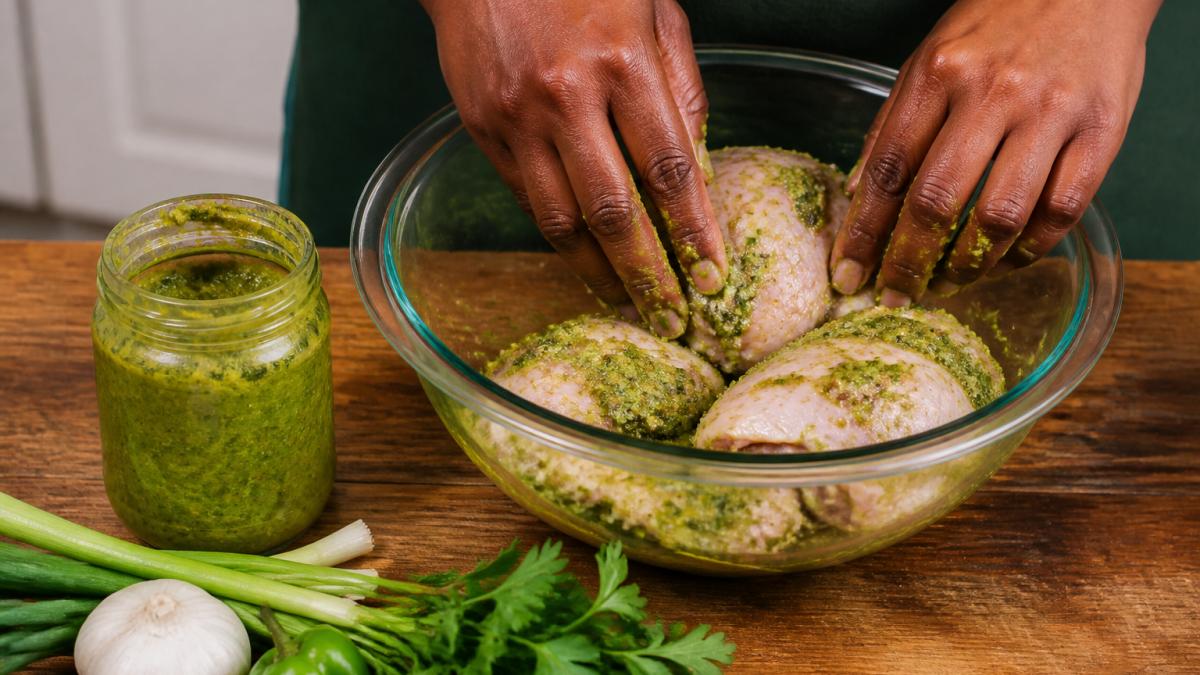
For weeknight thighs, toss them in a bowl with a tablespoon of epis per pound, a pinch of salt, and a squeeze of lime juice. Let them sit while the oven heats to 425°F. Roast for about 35 to 40 minutes.
For a Sunday roast, work epis under the skin of a whole chicken. Rub the outside too. Roast low and slow, then finish hot to crisp the skin.
A few practical notes:
- Pat the chicken dry before rubbing, so the epis sticks
- Don't crowd the pan; steam kills browning
- Save the pan drippings for rice
The thing most guides miss is that epis browns fast because of the oil. Keep an eye on the heat toward the end.
Beyond Meat: Epis in Rice, Beans, Soups, and Vegetables
Epis is not just for protein. Many home cooks stir it into rice, beans, soups, and vegetables to build a savory base fast.
For rice, add a tablespoon of epis to the pot right after you toast the grains in oil. Stir for a minute, then add your water.
For beans, add two tablespoons early in the simmer. The epis melts into the liquid and seasons every bean.
For soups and stews, treat epis like a base layer. Add it with the aromatics, before the liquid goes in. It blooms in the hot oil and sets the tone for the whole pot.
For vegetables, a teaspoon near the end of cooking is plenty. It lifts roasted carrots, sautéed greens, and even scrambled eggs.
This is the angle most recipes skip. Epis is a seasoning base, not a meat-only marinade. Once you start using it on vegetables and grains, a single jar does the work of several spice blends.
How to Store Haitian Epis So It Stays Fresh
How you store Haitian epis decides how long it keeps its bright, fresh flavor. Because it is made with fresh herbs and oil, it belongs in the refrigerator, not the pantry. The U.S. Department of Agriculture's FoodSafety.gov guidance puts the refrigerator at 40°F or below and the freezer at 0°F.
Keep it in a clean glass jar with a tight lid. Press the surface down so the oil sits on top, which helps slow browning.
How long it keeps.
A few storage rules that matter:
- Always use a clean spoon; never dip a wet or dirty one in
- Keep the lid sealed between uses
- Check the smell and color before each use
- Freeze leftovers in ice cube trays for single-use portions
- Label the jar with the date you made it
Freezing in portions.
Food-safety markers. The USDA's guidance is blunt: when in doubt, throw it out. Toss the jar if you see fuzzy growth, a sour or off smell, bubbling, or a color that has gone from bright green to dull brown-gray.
If you want a jar that is ready when you are, our authentic Haitian Epis takes the prep work off your plate and keeps the traditional flavor intact.
Frequently Asked Questions
How much Haitian epis should I use per pound of meat?
A good starting point is about 1 to 2 tablespoons of epis per pound of meat. Chicken and fish sit well at the lower end, while pork and beef can take closer to 2 tablespoons. Epis already contains salt, so season lightly with additional salt and taste before adjusting. If you are new to the flavor, start with 1 tablespoon, cook a small piece, and add more to your taste.
Can you use Haitian epis as a marinade?
Yes, and it works well as one. Because epis is a wet blend of herbs, garlic, onion, pepper, oil, and vinegar, it clings to meat and fish and seasons all the way through. For a Haitian epis marinade, coat the protein, cover it, and refrigerate. Give chicken at least 2 hours and up to overnight, fish 30 to 60 minutes, and pork or beef 4 hours to overnight. Pat the surface lightly dry before searing so it browns rather than steams.
How do you store Haitian epis once the jar is open?
Keep opened epis in a clean, airtight jar in the refrigerator. The vinegar, lime juice, and salt in the blend help preserve it, but it is still a fresh product. Use a clean spoon each time so you do not introduce bacteria, and keep the rim wiped. For specific shelf life and storage recommendations for Zizie Seasonings LLC's product, please refer to the product packaging or our website.
When should I add epis while cooking?
Add epis early for meats and stews so the herbs and aromatics have time to open up, ideally during marinating or at the start of cooking. For rice and beans, stir it in with the liquid before the pot comes to a boil. For quick dishes like sauteed vegetables or fish, add it in the last few minutes to keep the fresh herb flavor bright. Taste near the end and adjust with salt or lime juice.
Cooking with epis should feel simple, not fussy. The challenge is sourcing fresh herbs and getting the ratios right every time. That is where we come in. Our authentic Haitian Epis is blended for real home cooking, with a bright, fresh flavor and a texture that coats food evenly. Get started with Zizie Seasonings LLC and bring authentic Haitian flavor to your table tonight.
