
How to Use Haitian Epis for Beginners: A Simple Guide
Last Updated: October 30, 2026
Quick Summary
Haitian epis is a wet seasoning base you cook into meat, rice, and beans at the start of cooking, not a finishing spice. Start with 1 tablespoon per pound of food and build up, tasting as you go. Taste it plain first, since heat and salt vary between batches.
- Taste a quarter teaspoon plain before cooking to check heat and salt levels.
- Use 1 to 2 tablespoons of epis per pound of meat as a rub before cooking.
- Stir 1 to 2 tablespoons into the rice pot before adding the liquid.
- Add epis at the start of cooking, never at the end.
- Store epis sealed in the refrigerator and use a clean spoon every time.
Table of Contents
- What Haitian Epis Is and Why Beginners Reach for It
- Step 1: Taste Before You Cook
- Step 2: Add Haitian Epis to Meat, Rice, and Beans
- Haitian Epis Marinade Recipes for Weeknight Cooking
- How to Store Haitian Epis So It Stays Fresh
- Haitian Epis Shelf Life: What to Expect From Jarred and Homemade Blends
- Frequently Asked Questions
What Haitian Epis Is and Why Beginners Reach for It
Haitian epis is a blended seasoning base of peppers, garlic, onion, herbs, and oil that Haitian cooks use to season food from the inside out. If you have never cooked with it, you are in good company. This guide walks you through how to use Haitian epis for beginners, step by step, without guesswork.
Here is the short version. Epis is not a finishing spice you shake on at the table. It is a wet seasoning base you cook into meat, rice, and beans so the flavor goes all the way through.
That difference is why so many home cooks stall out. They treat epis like salt, use a pinch, and wonder why the dish tastes flat.
The Building Blocks of a Traditional Blend
A traditional blend leans on a handful of familiar ingredients. Most versions combine:
- Bell peppers, often green and red
- Garlic and onion
- Scallions and parsley
- Thyme and cloves
- Scotch bonnet or a milder pepper for heat
- Oil and vinegar to bind it
The balance shifts from kitchen to kitchen. Some families go heavy on garlic. Others want more heat.
If you would rather skip the chopping and blending, you can start with a ready-made jar. You can find Zizie Original Haitian Epis on our website, where current pricing and availability are listed.
Step 1: Taste Before You Cook
Taste your epis before it touches a pan. A small spoonful tells you two things: how hot it runs and how salty it is. Both change how much you use later.
Do this every time you open a new jar or blend a new batch. Heat levels vary, even between batches of the same recipe.
Here is a simple way to check:
- Taste a quarter teaspoon plain
- Note the heat and the salt level
- Adjust your recipe down if either runs strong
Watch out: skipping this step is the most common beginner mistake. A blend that tastes mild on the spoon can turn fierce once it cooks down and concentrates.
Step 2: Add Haitian Epis to Meat, Rice, and Beans
Meat is the classic starting point. Spoon epis over chicken, pork, or beef, rub it in, and let it sit. A common approach is 1 to 2 tablespoons per pound of meat, worked in by hand.
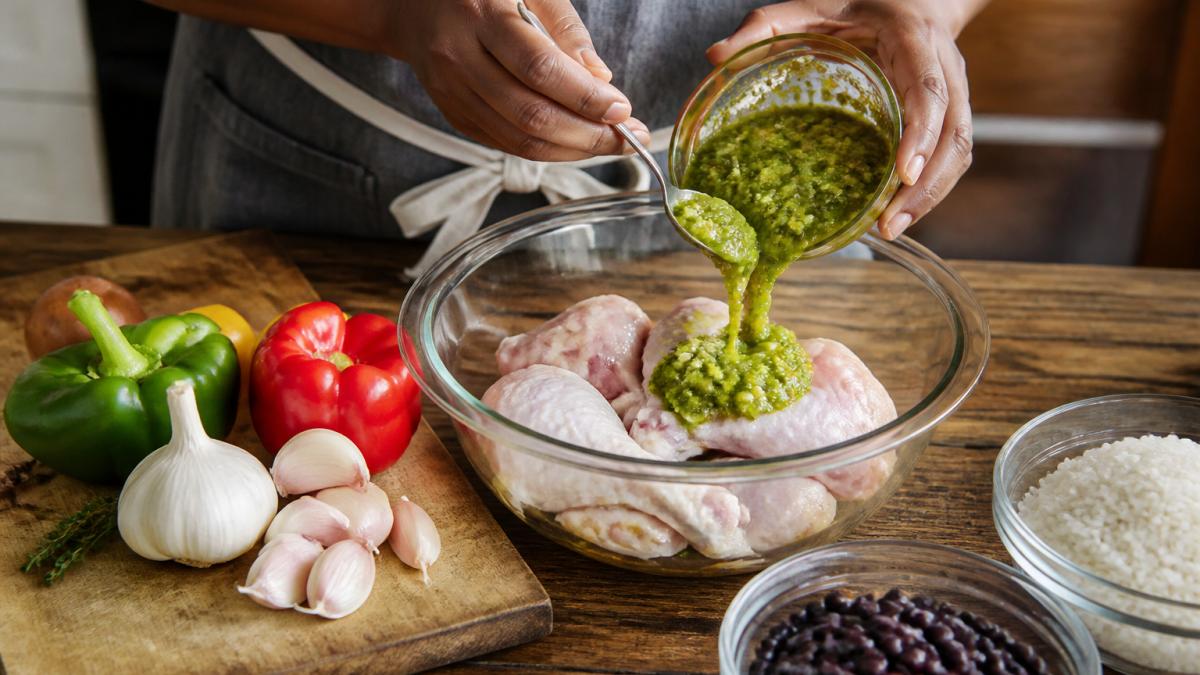
For rice, stir 1 to 2 tablespoons into the pot before the liquid goes in. The grains pick up color and aroma as they cook. Beans take the same treatment, added early so the seasoning simmers through.
Timing matters more than quantity. Add epis at the start of cooking, not the end. Heat draws the flavor out of the raw ingredients and into the food.
How Much to Use Without Overpowering a Dish
Start with 1 tablespoon per pound of food and build from there. That amount seasons without taking over.
Use these rough guides:
| Dish | Starting Amount | When to Add |
|---|---|---|
| Chicken or pork | 1-2 tbsp per lb | Before cooking, as a rub |
| Rice | 1-2 tbsp per pot | Before the liquid |
| Beans | 1-2 tbsp per pot | At the start of simmering |
| Marinades | 3-4 tbsp per cup of liquid | Whisked in raw |
Taste at the halfway point. If the dish needs more, add a little. You can always add, but you cannot take it back out.
Haitian Epis Marinade Recipes for Weeknight Cooking
A good marinade does the work while you do something else. Epis already carries the peppers, garlic, and herbs a marinade needs, so most versions come together in one bowl.
Here are three we rely on:
- Citrus chicken: 3 tbsp epis, juice of 1 lime, 2 tbsp oil. Marinate 30 minutes or overnight.
- Garlic pork: 4 tbsp epis, 3 extra minced garlic cloves, 1 tbsp vinegar. Marinate 1 hour.
- Quick fish: 2 tbsp epis, 1 tbsp oil, squeeze of lemon. Marinate 15 minutes only.
Short on time? A 30-minute marinade still works. The flavor will be lighter, but it beats no marinade at all.
To pick the right blend for these recipes, browse the full Zizie Seasonings collection and match the jar to the dish you have planned.
How to Store Haitian Epis So It Stays Fresh
Store epis in a sealed container in the refrigerator, following the storage directions on the label.
Follow these habits:
- Keep the jar sealed between uses
- Use a clean spoon every time
- Store it away from the fridge door, where temperatures swing
- Label the jar with the date you opened it
Watch out: leaving a spoon in the jar or double-dipping introduces bacteria and shortens the life of the blend. Scoop once, then seal.
For more kitchen tips and articles, the Zizie news page has additional guidance on getting the most from your seasoning.
Haitian Epis Shelf Life: What to Expect From Jarred and Homemade Blends
Shelf life depends on how a blend was made and how it is stored.
A few practical rules:
- Check the date on the jar and use it as your guide
- Smell the epis before each use
- Discard it if the color dulls or the smell turns sharp
- Keep homemade batches smaller so you use them before they fade
Shelf life depends on how the blend was made and how it is stored, so treat any date as a starting point, not a guarantee. If you have questions about a specific jar, contact the Zizie team directly for details on your batch.
Frequently Asked Questions
What is Haitian epis used for?
Haitian epis is an all-purpose seasoning base used across Haitian cooking. Home cooks stir it into marinades for chicken, pork, and fish, spoon it into rice and beans, and blend it into stews and braised dishes. Because it already combines peppers, garlic, herbs, and oil, it replaces several separate seasonings in one step. Beginners can treat it as the first layer of flavor in almost any savory dish, then adjust salt and heat at the end.
Can you use Haitian epis as a marinade?
Yes. Epis works as a marinade on its own or as the base for one. Coat chicken, pork, or fish with two to three tablespoons per pound, cover, and refrigerate for at least 30 minutes. For deeper flavor, let it sit overnight. If you want a Haitian epis marinade recipe with more punch, mix epis with lime juice, a splash of vinegar, and a pinch of salt before coating the meat.
Do you cook Haitian epis before adding it to food?
No. Jarred and homemade epis are added raw to dishes and cook along with the food. You spoon it over meat before searing, stir it into a pot of rice before the liquid goes in, or mix it into a stew at the start.
How long does Haitian epis last in the fridge?
Check the label on your jar for its specific date and storage guidance. If you see mold or notice an off smell, discard it.
Learning to cook with epis comes down to a few habits: taste first, season early, and start small. Zizie Seasonings LLC makes that easier with authentic Haitian Epis prepared from scratch using carefully selected ingredients and a signature spice blend. Get started with Zizie Seasonings LLC and bring real Haitian flavor to your weeknight dinners.
