
The Traditional Haitian Flavor Profile Guide for Home Cooks
Last Updated: November 4, 2026
Quick Summary
The traditional haitian flavor profile is a three-part structure: savory depth from peppers, onion, and garlic; earthy warmth from cloves and star anise; and a bright citrus finish from lime or sour orange. Haitian cooking is built on aroma, acid, and slow savory depth, with heat arriving last as an adjustable accent.
- Epis is the blended seasoning base of peppers, onion, garlic, scallion, parsley, thyme, citrus, and warm spices.
- Marinate protein in epis for at least a few hours, ideally overnight, before cooking.
- Cook the seasoning in oil before adding liquid to bloom the aromatics and remove the raw edge.
- Finish dishes with lime at the end, not the start, so the brightness survives the heat.
- A few whole cloves per batch is typical; too much turns the whole pot medicinal.
Table of Contents
- What the Traditional Haitian Flavor Profile Actually Tastes Like
- The Cultural Roots Behind Haitian Cuisine's Bold Flavors
- Herbs, Peppers, and Spices: The Ingredients That Build Haitian Seasoning
- Haitian Epis Recipe: What Goes Into the Base Seasoning
- How to Make Haitian Food Taste Authentic in Your Own Kitchen
- A Calibrated Guide to Heat and Spice in Haitian Cooking
- How Haitian Flavors Compare With Neighboring Caribbean Cuisines
- Building Your Haitian Pantry With Zizie Original Haitian Epis
- Frequently Asked Questions
What the Traditional Haitian Flavor Profile Actually Tastes Like
The traditional Haitian flavor profile is a three-part structure: savory depth from peppers, onion, and garlic; earthy warmth from cloves and star anise; and a bright citrus finish from lime and sour orange. This structure is what makes Haitian cooking recognizable in the first bite.
Most guides describe Haitian food as "bold" and stop there. That word hides the actual mechanics. Haitian cooking is not built on heat. It is built on aroma, acid, and slow savory depth, with heat arriving last as an adjustable accent.
Below, we break down each layer, name the ingredients responsible, and show you how to taste for them in your own kitchen. Once you can identify the layers, recreating them gets much easier.
Savory, Earthy, and Citrus-Bright: The Three Layers
Think of the flavor profile as a sequence, not a blend. The savory layer comes first: bell pepper, onion, garlic, and scallion cooked down until sweet. The earthy layer sits underneath it: cloves, star anise, black pepper, and thyme, used in small amounts that read as warmth rather than spice. The citrus layer cuts through both, usually from lime or sour orange juice added near the end.
Skip the citrus and the dish tastes heavy. Skip the earthy spices and it tastes flat. All three layers working together is the signature.
Aroma Before Heat: What You Smell First
Smell a pot of Haitian food before you taste it and you will notice cloves and thyme before any pepper. That is deliberate. The aromatic base, sometimes called epis, carries the scent of garlic, parsley, scallion, and clove into the oil before the protein ever goes in.
Heat is the last thing you register, and it is the easiest layer to control. A cook who adds scotch bonnet at the start gets a different dish than one who adds it late. More on that in the heat section.
The Cultural Roots Behind Haitian Cuisine's Bold Flavors
Haitian cuisine is Creole cuisine, and that word is doing real work. The food carries African cooking traditions, French technique, Spanish and indigenous Caribbean ingredients, and a Middle Eastern thread visible in the use of cloves and star anise.
The African influence shows up in the base: slow-cooked leafy greens, beans, and root vegetables treated as the center of a meal. French influence appears in technique and in the finished sauces. Spanish influence brought citrus and peppers into regular use across the island.
That history explains a practical point. Haitian cooking is not a pepper-forward cuisine in the way some neighboring islands are. It is a seasoning-forward cuisine. The Smithsonian's overview of African diaspora foodways traces how these cooking bases traveled and adapted, which is useful context for anyone learning the flavors from scratch.
Herbs, Peppers, and Spices: The Ingredients That Build Haitian Seasoning
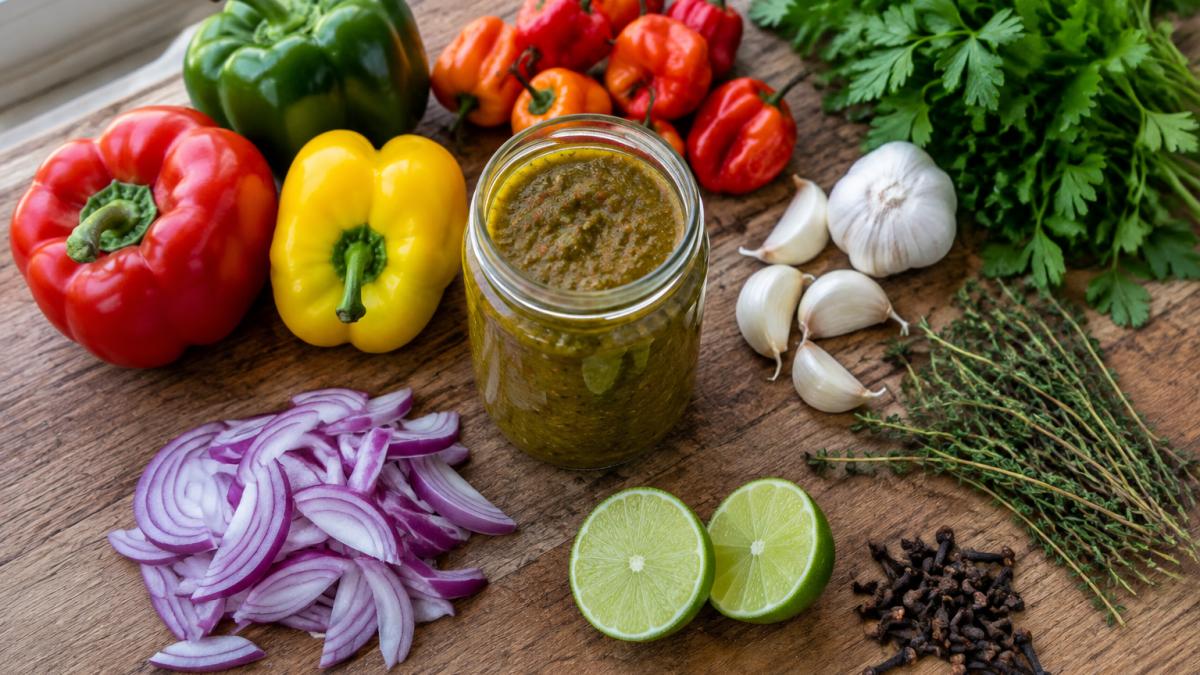
Every ingredient in a Haitian seasoning base has a job, and the job is more specific than "adds flavor." Some ingredients build body, some carry aroma into fat, some cut richness, and some simply keep the blend from tasting flat. Once you know which job each one does, you can substitute intelligently when your pantry is missing something, and you can taste a pot and know which layer is thin.
What Each Ingredient Does to the Dish
Bell pepper, sweetness and body. Red bell pepper is the volume ingredient in epis. It contributes water, sugar, and a soft vegetal sweetness that rounds out the sharper notes.
Scotch bonnet, fruit first, heat second. A scotch bonnet is more aromatic than a jalapeño, with a fruity, almost floral note that survives cooking.
Garlic and scallion, the savory backbone. Garlic supplies the sulfurous depth that reads as "cooked Haitian food" before anything else is added.
Parsley and thyme, freshness and a green top note. Flat-leaf parsley is the dominant herb in most household epis, with thyme playing a supporting role.
Clove and star anise, warmth. These are the ingredients that make outsiders pause, because they are associated with baking and warm drinks rather than savory cooking.
Substitutions That Preserve the Profile
- No scotch bonnet: use habanero, which is closely related and behaves almost identically. A jalapeño will give you the green note but not the fruit, so add a little extra bell pepper to compensate.
- No sour orange: combine lime juice with a small amount of regular orange juice. The result is less bitter but close enough for most cooked dishes.
- No star anise: increase the clove slightly, or add a pinch of ground allspice, which shares the warm, rounded character.
- No fresh thyme: dried thyme works at roughly one-third the volume, added earlier so it has time to hydrate.
- No parsley: cilantro is not a traditional substitute in Haitian epis and will change the profile noticeably; if parsley is unavailable, increase scallion instead.
How the Ingredients Behave Under Heat
Aromatics behave differently depending on when they enter the pot. Garlic and scallion added to cold oil and brought up slowly release their flavor without scorching. Clove and star anise are better added early so they can infuse the oil, but they should be counted rather than poured. Parsley and lime are best added late or off the heat, because their volatile compounds cook off quickly. Bell pepper sits in the middle: it needs time to soften and sweeten, but long cooking dulls its freshness.
If you want to see these seasonings applied to one dish end to end, our guide on how to season chicken Haitian style walks through the process step by step.
Haitian Epis Recipe: What Goes Into the Base Seasoning
Epis is the Haitian seasoning base: a blended paste of peppers, onion, garlic, scallion, parsley, thyme, citrus juice, and warm spices, used to marinate meat and start cooked dishes. It is the single most important element in the cuisine, and it is where most home cooks either succeed or stall.
A traditional epis recipe blends bell peppers, scotch bonnet, red onion, garlic, scallion, parsley, thyme, lime juice, vinegar, black pepper, cloves, and star anise into a loose paste. Some households add a little tomato paste for color. Others add sour orange when it is in season.
If you want to blend your own batch, our Haitian epis ingredients list lays out the components. For most busy cooks, though, epis takes time to source, prep, and blend. That is the gap a prepared jar fills.
How to Make Haitian Food Taste Authentic in Your Own Kitchen
Authentic flavor comes from three habits: marinate before you cook, build the base in oil, and add acid at the end. Most home cooks skip the first one and wonder why the result tastes thin.
Marinate protein in epis for at least a few hours, ideally overnight. Then cook the seasoning itself in oil before adding liquid, which blooms the aromatics and removes the raw edge.
Two mistakes show up constantly. The first is overseasoning with cloves, which overwhelms everything else. The second is adding citrus early, which mutes it by the time the dish reaches the table.
For a deeper walkthrough of the technique, our guide to making Haitian food taste authentic covers the full method, and our practical cooking guide for Haitian epis shows how to use it across different dishes rather than just one.
A Calibrated Guide to Heat and Spice in Haitian Cooking
Haitian heat is adjustable, and that is the point most guides miss. Heat is adjustable, and the pepper is what you adjust. A cook can make the same recipe read as gently warm or genuinely fiery without changing anything else about the dish, and understanding how that dial works is the difference between a pot that tastes balanced and one that tastes like hot sauce with dinner underneath.
The first distinction to make is between aromatic seasoning and chile heat. Epis is aromatic: the scotch bonnet in it contributes fruit and aroma more than raw burn, especially once the paste is cooked in oil. A dish made with a full epis base but no pikliz reads as warmly spiced, not fiery.
How Heat Moves Through a Dish
Capsaicin, the compound responsible for chile burn, is fat-soluble and does not dissolve evenly in water. That has practical consequences:
- Fat carries heat. A pepper blended into an oil-based epis distributes its heat through the fat, which is why the burn arrives evenly rather than in pockets.
- Water dilutes heat. Adding water or stock to a braise spreads the capsaicin through a larger volume, lowering the perceived heat per spoonful.
- Seeds and pith concentrate heat. Removing them from a scotch bonnet drops the burn substantially while leaving most of the fruitiness intact.
- Acid masks heat. A squeeze of lime at the end makes a dish taste less hot without removing any capsaicin, which is why acid is the cook's reset button.
- Sugar and starch soften heat. A little sweetness from cooked bell pepper or a starchy side like rice and beans makes the same dish read milder.
A Four-Level Calibration
- Mild: epis blended without scotch bonnet, or with one pepper seeded and halved. Pikliz served on the side, not spooned over the plate. Suitable for children and guests who do not eat chile.
- Medium: one whole scotch bonnet per batch of epis, seeds and pith removed. This is the most common household setting and reads as warm rather than hot.
- Hot: one scotch bonnet with seeds left in, plus a spoonful of pikliz brine over the finished dish. The brine carries capsaicin that the flesh does not.
- Very hot: two scotch bonnets with seeds, plus pikliz served alongside rather than on the side. This is a deliberate choice, not a default.
Pikliz as a Heat Control, Not Just a Condiment
Pikliz is a pickled relish of cabbage, carrot, onion, and scotch bonnet in vinegar brine, and it functions as a heat delivery system. The brine pulls capsaicin out of the peppers, so a spoonful of liquid is often hotter than a spoonful of the vegetables. That is why servers offer both the solids and the brine separately, and why a small amount of brine can transform a mild plate.
Tasting and Adjusting
Tasting epis straight from the blender tells you little about the finished dish, so taste the finished pot rather than the paste.
If a dish comes out hotter than intended, add acid (lime or vinegar), add fat (a spoonful of oil or butter), or serve it over rice and beans, which spreads the capsaicin across more starch. If it comes out too mild, do not add raw pepper at the end; instead, stir in a spoonful of pikliz brine, which distributes heat evenly without changing the texture of the dish.
Here is how the four heat levels break down, from mild to very hot.
| Level | Scotch bonnet | Pikliz |
|---|---|---|
| Mild | None, or one seeded and halved | Served on the side |
| Medium | One whole, seeds and pith removed | Not specified |
| Hot | One with seeds left in | Spoonful of brine over dish |
| Very hot | Two with seeds | Served alongside |
How Haitian Flavors Compare With Neighboring Caribbean Cuisines
Haitian food is more aromatic and less acid-forward than Cuban cooking, and less heat-driven than Jamaican. That distinction matters when you are deciding what to cook and what to expect.
Cuban cooking leans on cumin, oregano, and citrus in a brighter, sharper profile. Jamaican cooking puts scotch bonnet and allspice at the center, with heat as a defining feature rather than a variable. Haitian cooking keeps the pepper present but subordinate to clove, thyme, and slow-cooked savory depth. Puerto Rican cooking shares the sofrito-style base but uses different aromatics.
The closest structural cousin is actually the sofrito tradition across the Spanish Caribbean. The difference is what gets added: Haitian epis leans into warm spice and acid in a way the others do not. If you have cooked with Caribbean foodways research from the University of the West Indies, the contrast will feel familiar.
Building Your Haitian Pantry With Zizie Original Haitian Epis
A Haitian pantry needs very little to start: epis, rice, beans, thyme, cloves, lime, and a jar of pikliz.
That is exactly why we make Zizie Original Haitian Epis.
If you have never cooked Haitian food, start with chicken. Brown it, spoon in the epis, add a little water, and let it cook down.
The hardest part of Haitian cooking is not technique. It is assembling the base. Get the epis right and the rest of the pot follows.
Zizie Original Haitian Epis gives you that base in one jar, prepared from carefully selected ingredients and our signature blend of spices.
Get Zizie Original Haitian Epis and start with a chicken dish this week. Brown the meat, add the epis, and taste what the three layers actually do.

Frequently Asked Questions
What are the core flavors of the traditional Haitian flavor profile?
Haitian cooking layers three things: a savory base from epis (peppers, onion, garlic, herbs), an earthy depth from cloves, star anise, and djon djon mushrooms, and a citrus-bright finish from lemon and lime. Heat is present but usually controlled, coming from scotch bonnet or pikliz served alongside rather than dumped into the pot. The result reads bold and aromatic first, spicy second.
What is the role of Epis in Haitian cooking?
Epis is the seasoning base that goes into almost everything: marinades for griot and chicken, rice and beans, stews, and fish. It combines bell peppers, onion, garlic, herbs, and citrus into a wet paste so the flavor penetrates meat before cooking. Making it from scratch takes prep time, which is why many home cooks keep a jar of prepared epis on hand for weeknight meals.
How does the Haitian flavor profile differ from other Caribbean cuisines?
Haitian food leans more on aromatic herbs, citrus, and warm spices like cloves and star anise than on heavy curry or allspice-forward seasoning. Where Jamaican cooking often leads with scorching scotch bonnet heat and jerk smoke, Haitian dishes tend to keep the heat in a condiment like pikliz and let the epis carry the aroma. French technique and African ingredients meet in the same pot.
What are the essential ingredients for authentic Haitian seasoning?
A basic epis calls for bell peppers, onion, garlic, scallion, parsley, thyme, lime or sour orange juice, and a scotch bonnet or two, blended into a paste with salt and oil. Cloves and star anise appear in braises and rice dishes. Pikliz, the pickled cabbage and carrot relish, adds acid and crunch. Keeping these on hand covers most traditional recipes.
Can I use a store-bought epis instead of making it from scratch?
Yes. A prepared Haitian epis saves the chopping and blending step, which is most of the work in a weeknight Haitian meal. Use it the same way you would homemade: rub it into pork or chicken before marinating, stir a spoonful into rice and beans, or add it to a stew early so the herbs cook down. Check the ingredient list for real peppers, herbs, and citrus rather than fillers.
How do I control the heat level in Haitian dishes?
Keep the scotch bonnet whole and pierced rather than chopped when you want aroma without a burn, then remove it before serving. Serve pikliz and hot sauce on the side so each person adjusts their own plate. If you are new to the cuisine, start with half a pepper in your epis and taste after the dish simmers, since heat builds as the paste cooks into the food.
